Monday, November 19, 2012

San Pancho (San Francisco), Mexico


San Pancho's History
In the early stages of San Pancho’s development, the story goes that the town evolved out of a hacienda and later communal ejidal territory into a humble fishing village still named after the patron saint San Francisco. For decades, the handful of families that made up the town fished for their subsistence, and raised livestock and local fruit crops.
During his term, President Echeverría adopted San Pancho as the site for his particular vision of a “third world” “self-sufficient” model town. As a result of his special interest, funds were poured into the humble village that at the time did not even have electricity. . Nonetheless, an infrastructure was constructed. Roads were laid and proper housing was built for the small population of fishermen and farmers. Not to mention schools, a fishing museum, industrial factory, and modern fully-equipped hospital were all constructed and inaugurated by the president as part of his dream of turning San Pancho into a “university of theThird World”.
While the factory that processed local fruits went on to provide jobs for the community well on into the 1980s, the rest of Echeverría’s vision for San Pancho was brought to an abrupt halt with the end of his presidential term and the miserable state of the Mexican economy at his term’s end. Consequently, the ventures the President had proposed failed, and San Pancho drifted back into a drowsy tranquility. The fishing museum that had once housed perhaps the largest palapa in Mexico and was graced with elegant fountains that shortly fell into disrepair. Once the fruit processing plants closed down, and the “university” building went vacant without any students or professors to fill it, the overgrown tropical vegetation reclaimed the new developments and San Pancho went back to its sleepy existence. The town’s inhabitants went back to fishing and growing fruit, and with San Pancho still hard to reach, little changed.
Yet with the cobblestone streets, schools, and fully-functioning hospital, San Pancho still remained clearly unique and desirable, in recent years has received the interest of an increased amount of tourists especially as a 2nd-home destination.
History of San Pancho was supplied by San Pancho Life, the most up-to-date and informative website for the residential community and visitors to San Francisco (San Pancho) Nayarit Mexico. Please explore the entire website to learn more, and check back for regular updates. www.sanpancholife.com.
This is of course the political correct version of San Pancho’s history. Other stories include the presidents’ interest in this town was really due to his most favorite hooker, which lived here. You can always research it for yourself. You will probably find some other juicy stories. Be sure to let me know whatever you find out.
I found that this little town has everything you could want in a vacation spot or second home sight. With ATM’s, Wi-Fi, hospital, pharmacies, bus service, taxies, easy walking and driving streets, friendly people both locals and tourists, polo fields, a great long beach, fishing, surfing, horseback riding, snorkeling and turtles (Grupo Ecológico de la Costa Verde, A.C. www.project-tortuga.org)just to name a few. It is a favorite destination for weddings. There have been five that I know about in the last two weeks.
Humpback whales have started showing up off our coast. Not close enough for me to get a good photograph, yet. A crocodile and two babies live in the towns’ river. The adult likes to make an appearance in the early afternoon on the beach for a little bit of sunbathing.
It’s safe to walk alone at night throughout town so it is easy to enjoy all aspect of what this little town has to offer. Big city life is just a few kilometers away in Puerto Vallarta. If you need a Wal-Mart, Home Depot, McDonalds or Burger King fix that too is not far away.
San Pancho has an excellent selection of restaurants from the quick tacos, hot dogs, hamburgers to a sit-down place with cloth napkins; prices ranging from 12-300 peso per meal. There is something for every budget and taste. San Pancho has three restaurants/bars on the beach they’re all excellent places to eat, drink and watch the most beautiful sunsets ever. Live music can be found frequently throughout town preforming at various restaurants adding to an evening’s enjoyment. Café Arte www.decodeus.com, El Pollo Polo cel 322-182-3110, The Blue Pig, Café Paraiso (on Facebook).  

The same is true for places to stay, I’m renting a room for 1500 peso or $120 USD a month (it is very basic and close to the beach) all the way up to the very luxurious places with pools and Wi-Fi and housekeepers; again something for every budget. You can check out these local realtors for more specific information: Rancho Riviera Realty www.riveralifestylesw.com, Lloyd’s www.lloydpuertavallarta.com or michelanpancho@gmail.com.

The best taller mecanico (auto mechanic) in the area is Abel Sanchez galaxyfi@ymail.com in San Ignacio, about 10km away. I had my clutch done there and they did a great job.
I will have been here for two months when I leave at the end of this one. It is a very comfortable place to live. It feels like home when you first step into town. Leaving will be hard, but I have to do it. I will be taking many new friends with me when I do. I still have many places to visit and experiences to have on this trip I have planned… 

Thursday, November 15, 2012

Paella


You need rice, seafood (shrimp, mussels and anything you want) chicken, pork, sausage, bacon, onions, garlic, peppers, saffron, and veggies. It takes about one hour to cook. This is a large quantity so plan to feed a lot of people and its makes great leftovers.

Saturday, November 3, 2012

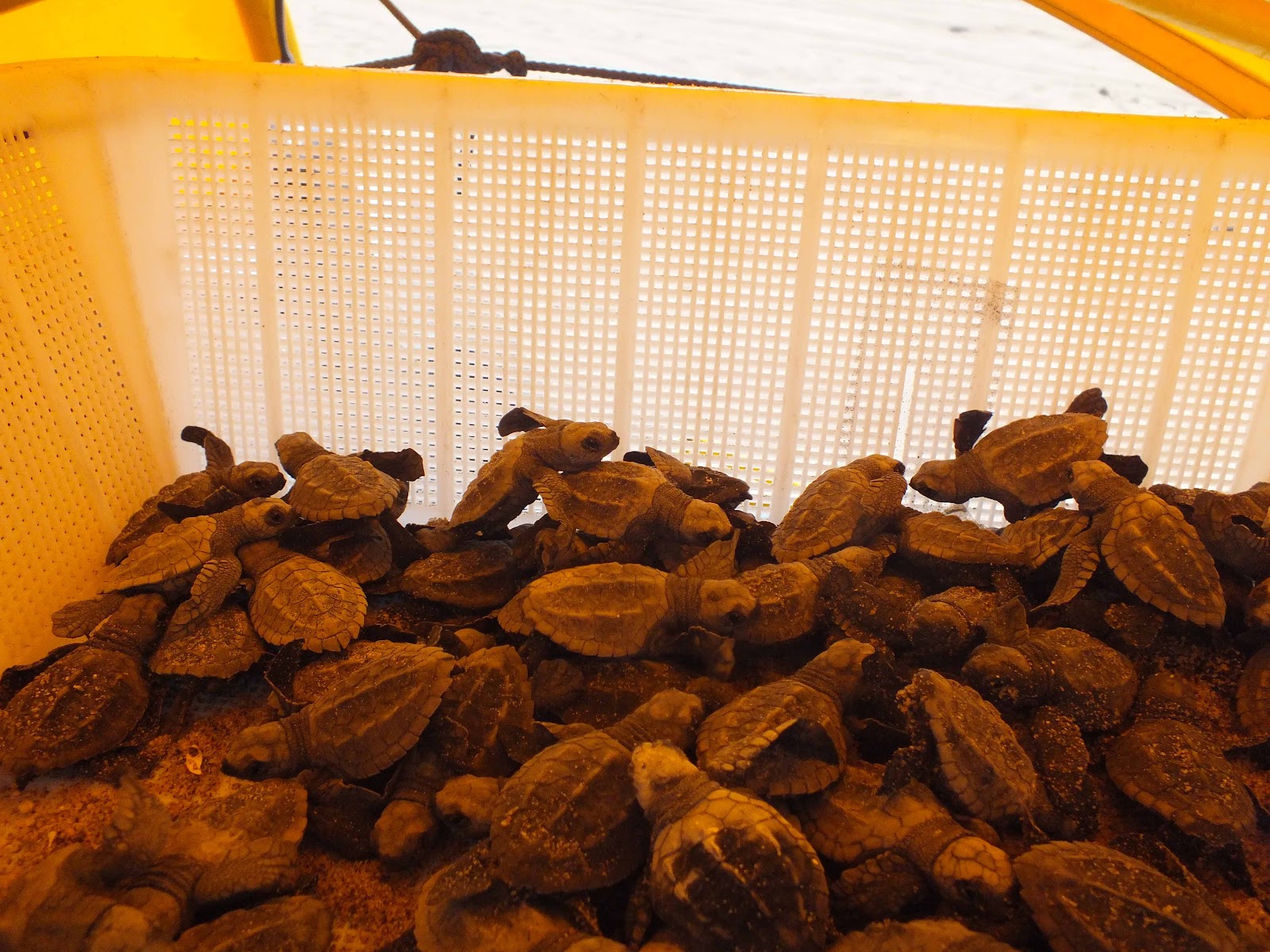
Olive Ridley Sea Turtles of San Pancho


First a bit of history:
In the time before people arrived in North America the marine turtles had well established nesting areas along the coastal waters of Mexico. The oldest locals of San Francisco (San Pancho) can still recall the time when hundreds of turtles would climb their way up onto the beaches, where they were hatched from, to lay their eggs.
With the growing human population, changes in the topography of the beaches, and coastal developments have dramatically altered their habitat over the last 100 years. By 1988, turtles have been reduced from tens of thousands to less than 200 nesting turtles per year. 
Conservation efforts to protect the turtles started in the late eighties because of the concerns that the turtles will soon become extinct.
In 1992 the Grupo Ecológico de la Costa Verde, A.C. group was formed and built the first marine nursery in San Francisco Nayarit, by that summer the protection of both the Olive Ridley and Leatherback turtles had begun. Over the next 20 years the turtle population has gone from 200 to 1,170 nests.
These last few weeks I have had the opportunity to work with this organization and some of the great dedicated people that volunteer each year to save these turtles. The work is varied and very rewarding especially when I got to see the eggs that have been protected hatch and get to release back to the sea at sunset. It was also fun to see the excitement in the faces of some of enthusiastic tourists that were on the beach at that time of release.
More information can be found on the website for the protection of these turtles at
http://www.project-tortuga.org/index.html
  

Saturday, October 13, 2012

Mazatlan


 You need to take time and a deep breath; patience goes a long way in determining whether your experience will be an adventure or an ordeal. It’s all in the attitude. Please keep that in mind anytime you travel anywhere especially foreign countries. I’m having a great time and every place is different from the last. One thing has held true and that is the people and food has been outstanding.
Mazatlan is a mix between our old favorites like McDonalds, Burger King, Home Depot Office Depot just to name a few along with the Mexican flair and specialty shops. Beer of course is sold on every street corner. One thing that the Mexican food has over our old fast foods places is it is always fresh and made to order it is never reheated from frozen. I love it.
There is no mistake that this is a beach town with all the water sports you could possibly want from parasailing, kayaking, boogie boards, jet skiing, banana boats, catamarans, fishing, body surfing as well as spending your day in a hammock under a palapa on the beach. Mazatlan has eight different beaches and three small islands you can visit. It also has art galleries, film and theaters, concerts, opera and more. Surely you can find many things to your liking.
I found hotels from $290 pesos ($25US) and up. There again something for every budget. I stayed at a RV park on the beach for $150 pesos ($12US) a night tent camping. Many RVers return each season quite a few have decided to stay full time it sure seems to agree with everyone.
I noticed many new construction site and others undergoing remolding. One thing is for sure the face of Mazatlan is always changing. The mix of new and old is outstanding.
I enjoyed my short stay here. It is differently on my list to return to. 


Tuesday, October 9, 2012

Boca del Rio, Sinalora


I have been camping on the beach at a little fishing village, Boca del Rio for the last 3 weeks. They have electricity and cell phones but no internet. Sorry I didn’t kept up but…
I spent most of my time, when not in the water (not snorkeling because of the sandy beach) with one family that happens to run one of the restaurants in town which came in handy when it came time to eat. I have learned many new receipts most of which use lime juice, tomato juice, cucumber, chili pepper, onion, tomatoes, and shrimp or potatoes and cheese. Did you know that lime juice cooks your fish so your soup is served cold?
They have tried to teach me the names of many of the local fish, mostly I learned that the fish are bony or the one with the yellow strip can be fillet and there for boneless and both are fried.
Sept 19th was opening day of their 6 month shrimp season. It was a good day for the fishermen; they only get 100 pesos (less than $10) per kilo (about 2.5lb). They have only had two or three good days several days they didn’t even bother to go out. The water needs to be rough for them to have the best catch. What they make during this season is to carry them throughout the year. I do hope and pray for a long and profitable season. There shrimp are very large we would call them extra-large jumbo prawns as you can see from my photos. They eat some of the heads too, I tried but I’m not getting the hang of it.
 I was planning to take the ferry to La Paz, Baja but it turns out that the ferry would cost me $400 one-way for me and my car. Not worth it.