

Panama is the first country that I have traveled in as an
official backpacker; large backpack instead of all the stuff in my car and
trailer, traveling by bus not driving and having to put gas in the car, not using
a tent but finding a bed in different hostels along the way. The adventure has
changed but continues…


My first stop was Panama City.
This is a much larger and more diverse city than I had imagined; it has also earned
the nickname “Crossroads of the World” because the fact that so many people
from all over the world have passed through and some stayed for a while giving
this Latin city an uniquely international atmosphere.
The city is about the same size as
Portland, Oregon (population 700,000 or more). Panama is an Indian word meaning
“an abundance of fish,” but any visitor could have figured that once looking
through the menu of any restaurant here and/or with a visit to the fish market.
Panama City is a 24 hour city;
there is something going on all the time and for everyone’s taste and time
schedule.
Panama called the melting pot, but
it should be better called the sancocho pot, it is a local dish where all the
ingredients have their own contributing flavor, but with still keeping their
own identity in the process.


Any seaports
fish market is
a vital and fascinating part of the town or city, and this one has some
specialties. Interesting to me, I found some new sea foods that I had to try. Also,
the eateries outside the market gave me a chance to try other things. I
recommend trying things especially if you have not considered so in the past,
after all that is what traveling should be about; new experiences.

 The Panama Canal
, started
by the French in 1880, but after 20 years, many people dying from yellow fever,
malaria, and problems with the extremes of the environment they stopped. In
1903, the US bought the land from the French for $40 million and finished it by
1914. The canal is still one of the engineering wonders of the world on the
level of the “Mars probe” of the Wright Brothers’ days.
Today container and cruise ships
squeeze through with just inches to spare. With some ships being just too big (a
small percentage of today’s world fleet), and looking into the future, Panama
is currently working on an extra set of wider and deeper locks.

The average fee for using the canal
is $100,000 (cash only, no checks or charges), but the record is $419,600 paid
by the “Norwegian Pearl” and Richard
Halliburton paid only 36 cents to swim the
50 mile canal in 1926, it did take him 10 days to do it. Today no one is
allowed to swim the canal, just in case someone was thinking about giving it a
try.
It was back in the 1524 when the Spain’s
King Carlos V, ordered a survey to be done, but decided that it was not
possible at the time.
Today it is still an impressive
sight and especially much worth a visit… More information on the canal may be
gotten from the book “The Path Between the Seas” by David McCullough.
Remember that if you are a senior
person (57 years or older) be sure to ask for your discount, 50% at the canal.
 Casco Antiguo
The diverse architecture displayed
in this area of Panama City is quite intriguing. The walled city, founded in
1673 because the city fathers thought that it would be more defensible than the
original city on the other side of the bay. It was sacked and plundered by the Pirate,
Henry Morgan.
When Panama gained their
independence from Columbia in 1903, it began to sink into decrepitude. In the
last decade, Casco Antiguo area was declared a World Heritage site, because of
that it is undergoing a dramatic rebirth. Many buildings have been restored to
their colonial status foreign, and local residents have moved into the expensive
houses and apartments. New shops and restaurants are prospering tourist enjoy
the charming city squares, churches, architecture, and seeing the work in
process. With many of the dilapidated buildings being occupied by squatters, it
adds to the unique atmosphere of tradition and transformation.
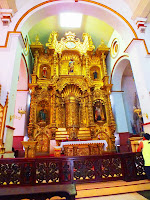
One of my favorites was,
Iglesia
of San Jose the Church of the Golden Altar; legend has it that when the Welsh
pirate Morgan was burning and looting the original settlement, a priest had the
enormous altar painted in black tar so its value would be concealed.
Catedral de Nuestra Senora de
la Asuncion, the construction began in 1688, but took more than 100 years
to complete. The towers were inlaid with mother of pearl from the Perlas
Islands.
Plaza Bolivar, named after
the Simon Bolivar El Libertador, most responsible for independence from Spain. In
1826, Bolivar attempted to form a union of Latin American states including
Panama.
 Flat Arch
a powerful
feature of the quarter, which stands among the ruins of the
Iglesia de Santo
Domingo. Since it is virtually horizontal, with no keystone, and said to have
been used to support the argument that Panama was free from earthquakes, and
therefore safer for construction of the canal than other countries in Central
America.


 Heat oil, cut plantains
into half and then into thirds (or cut then into coin size slices
 about 1 inch
thick), soak in water and garlic, fry then in oil for about 4 to 5 minutes or
they have a hard outside, remove and drain
 Smash plantains
into flattened pieces about ¼ to ½ inch thick, fry again in hot oil until brown
and crispy, remove and drain

 Heat oil, add hotdogs,
onion, garlic, chilies to brown, add tomato sauce and water then simmer, add chopped
apple, cilantro, salt and pepper (if sauce is too thin then add dried bread
pieces to thicken sauce)


