Thursday, May 29, 2014

Thousands of Fireflies; the Best Show Todate


My one night camping stay in Santa Rosa National Park, Costa Rica gave me solitude (no other campers), but not the feeling of isolation. I had many visitors, a young buck, iguanas, numerous birds, and some howler monkeys in the trees, several other noisy critters rustling in the brush. But the best was hours of the greatest firefly show I had the good fortune to witness. The fireflies flitted around at two or three feet (.5 to 1 meter) above ground in the grassy areas; like a blanket of tiny twinkling lights constantly on the move in the near distance. I placed a chair a few feet away from my tent and set there watching with delight; I grab my camera and tried several ways to photograph what I was witnessing but without luck. 

The fireflies started showing up at dusk and carried on well into the night, but it did seem that after about three hours their quantities diminish. As I sat in amazement the fireflies buzzed all around me, like I was being included in their evenings presentation.

There were only two things that would have made this night better, first is that I could have afforded to stay more than one night in the campgrounds ($12 a night when just eight months ago it was $2), second more than ever, I wished my grandchildren could have been there to witness it with  me… and help catch some.

Once again this will be one of those stories I will only be able to tell, over and over again… like a fish story that grows each time it is told.

Note: If anyone knows how to take photos of the fireflies please let me know. I hope I will get another chance before I finish my travels in November 2014.


Wednesday, May 14, 2014

Eight Months of Backpacking Through Central and South America


My eight month backpacking part of my journey has now come to an end. I have my car back and will be hitting the road again camping my way back to Seattle.


My time in Costa Rica, Panama, Colombia, Ecuador, Peru and Chili was awesome. Riding the bus throughout these countries is the cheapest way to go. It was nice leaving the driving to someone else most of the time. I frequently took the night bus that way I would also save on the price of a nights logging. 


I saw and did most everything on my way south throughout these countries, so I was able to do 6 countries in six or seven weeks on my way back north mostly just passing through. The longest bus ride was 48 hours which was from Santiago Chili to Lima Peru. I did need several days rest and time to walking about the town before continuing on. 

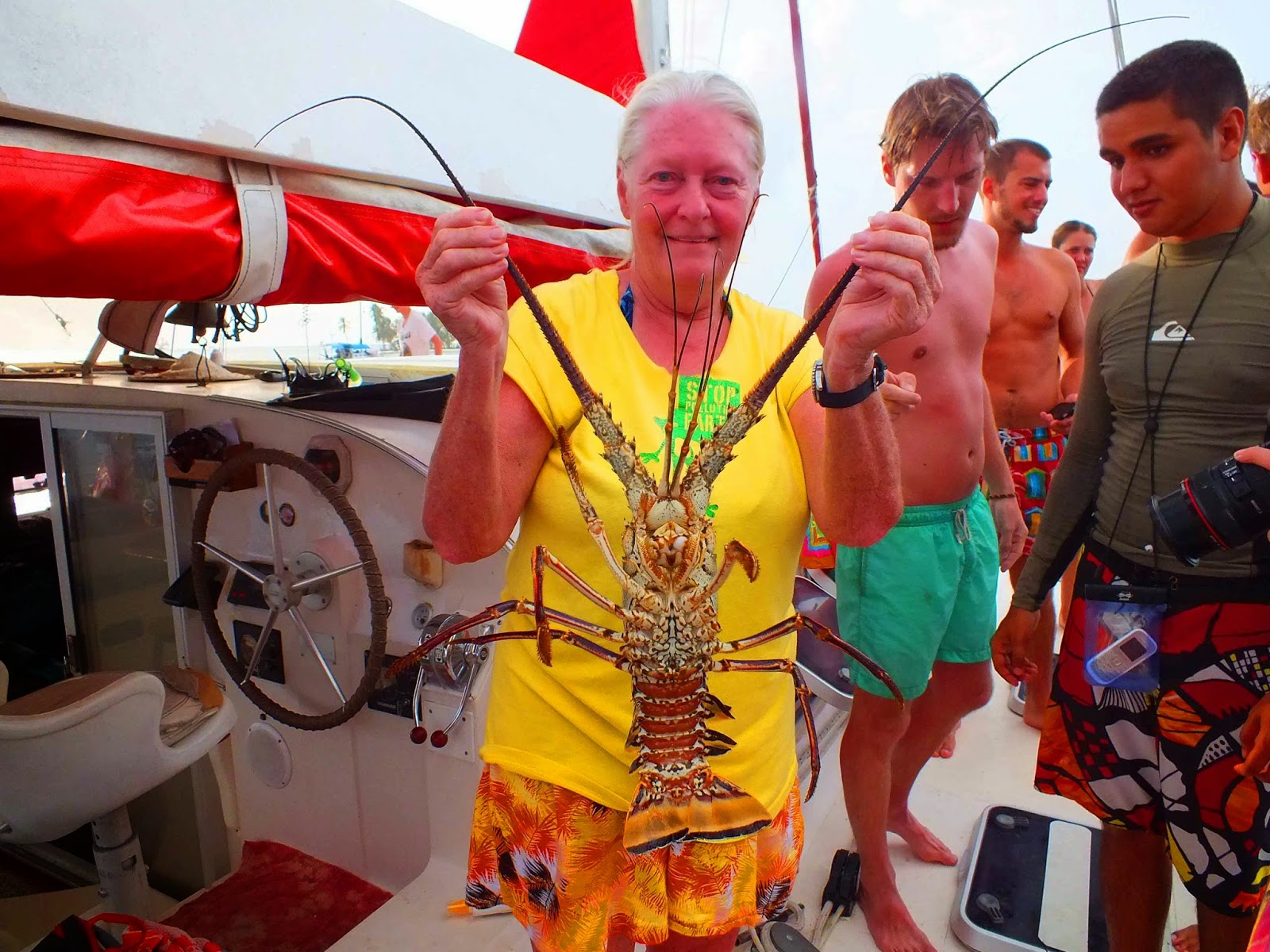
I did take the five day sailboat trip from Colombia to Panama on the Jacqueline Catamaran; a tremendous trip through the San Blas Islands. Full of sun, fun and snorkeling, even diving 2 ship wrecks; one was an old pirate’s rum running ship that the captain ran aground to prevent losing his cargo, the other is a more current sailing ship that as the story goes:


By Don Winner for Panama-Guide.com -
Don North disappeared from his sailboat in the San Blas islands in January 2011. Shortly thereafter, the body of Jean Pierre Bouhard came floating to the surface of the ocean near Portobelo. Bouhard had been murdered, and his body had been tied to an anchor and thrown into the ocean.

Friends of Don North contacted me on Thursday, 10 February 2011, to let me know they thought something was wrong. They put me into contact with North's nephew, Ezra North. He immediately flew to Panama, and I helped him file an official complaint with the Panamanian authorities on Friday, 11 February 2011. The next day, on Saturday, we went with the DIJ and FBI agents to the area of Portobelo, to search for Javier Martin. Nothing happened on Sunday. Then on Monday, 14 February 2011 - Valentine's Day - I called an impromptu press conference outside of the offices of the DIJ and announced to the Panamanian media that we were looking for Javier Martin as a suspect serial killer, in the murders of Jean Pierre Bouhard and Don North. Martin's photo aired on the channel 2 TVN news broadcast at 12:00 noon that day.
The judge responsible for the trial of the Spaniard Javier Martin, for the murder of the American expat Don North, has established a date for the trial. 

The hearing will be held on Wednesday, 16 April 2014, starting at 10:00 am.

Wednesday, March 19, 2014

Chile


As it turns out, Chile is even more expensive than Costa Rica. So my time here will be short and exceptionally low key, I will be doing things that are free or at least of the ultra-low cost variety.


Chile lies west of the Andes, between the foothills of the Andes Mountains and the Pacific Ocean. For some reason, I thought that it would be a country of high cliffs and rugged mountains, but it is a country of barren sand, rainless weather, and a long way between nowhere at least as far south as Santiago. This has been common to what I have seen since I left Ecuador. At least Peru has the advantage of the Amazon Region on the eastern side of the Andes, which Chile does not have. So if you are a giant fan of dry, plant less land, with bright sunny days; Chile is for you.


I was hoping to move on into the southern part of Argentina next, but it is as expensive as Chile this time of year, add to that the $180US Reciprocity Fee charged when entering it is now over my $1200 US budget I have for each month. I will have to turn around start heading back north and for home on the 26th of March 2014. That means there are 4 countries in South America that charge $130US or more for United State Citizens to enter them; Bolivia, Paraguay, Brazil and Argentina (this is of course in return what we charge them to come to the states). 


Santiago is at an elevation of only 520 m (1,706 ft) with a mild climate and is the capital of Chile. Santiago founded in 1541 and has been the capital city since colonial times. The city has a downtown core of 19th century neoclassical architecture and winding side-streets, dotted by art deco, neo-gothic, and other styles. Santiago's cityscape is shaped by several stand-alone hills and the fast-flowing Mapocho River. Mountains of the Andes chain can be seen from most points in the city. These mountains contribute to a considerable smog problem, particularly during winter. The city outskirts are surrounded by vineyards, and Santiago is within a few hours of both the mountains and the Pacific Ocean.


My time in Santiago has been intriguing; it has an extensive transit system of Metro (subway) and a large network of surface street buses. The city looks to be well planned out with many sub zones, city parks, and a wide variety of restaurants, pubs, nightclubs, cinemas, performing arts, sports and shopping. Santiago has good streets with few potholes and wide sidewalks with easy walking and wheelchair ramps all over the city. 


I have found the people here to be friendly and mostly well dressed (not much saying poor) giving the impression of a not being a “3rd world country” but more of a modern metropolis. I am sorry to say I have not found much in the way of street food here. Too bad, I do love eating the local people’s food. Now, I will just have to wait until I start going back north of Peru, the more north the better.


Monday, March 3, 2014

Machu Picchu, City of the Incas, Cuzco, Peru


 Machu means old, and Picchu means peak, so we have Old Peak. The Inca site built in the 15th century, at about 8000 feet above sea level and located in Cusco a sacred valley which lies 50 miles NW of the current city of Cusco. It is thought that this site built for the Inca Emperor Pachacuti (1438-1472) and is sometimes mistakenly referred to as the “Lost City of the Incas”.

The estate built around 1450 but abandoned around the time of the Spanish Conquest, a century later. It seems that the Spanish did not know of this site, so it remained undisturbed.


Not known to the outside world till 1911 when an American historian, Hiram Bingham, brought international attention to it.


It became a UNESCO World Heritage Site in 1983. Then in 2007, Machu Picchu was voted one of the New Seven Wonders of the World in a worldwide Internet poll.


From what I have seen of this site and the Inca descendants,  short stocky people that are strong and proud. They continue to live and farm in some of the most rugged and inhospitably steep land. I have seen these people clear and farm this land by hand; a backbreaking labor intensive effort that has gone on for centuries.  


An Inca bridge was built to the west of Machu Picchu, the tree-trunk bridge, at a location where a gap occurs in the cliff that measures 6 meters (20 ft). It could be bridged by two tree trunks, but with the trees removed, there was 570 meters (1,870 ft) fall to the base of the cliffs.